

Digital marketing has become an essential part of how businesses reach customers, build brand awareness, and grow their online presence. Whether a company operates locally or serves customers internationally, online marketing provides opportunities to connect with the right audience through websites, search engines, social media, email, and digital advertising.
However, successful digital marketing requires more than simply publishing content or running advertisements. Businesses need a clear strategy based on their audience, goals, available resources, and performance.
At Blyntora, we explore practical digital marketing insights, strategies, and industry developments to help businesses and professionals make informed decisions and improve their online visibility.
1. Understanding Digital Marketing
Digital marketing refers to promoting products, services, or brands through online channels. It includes several methods that work together to attract potential customers, generate interest, and encourage meaningful actions.
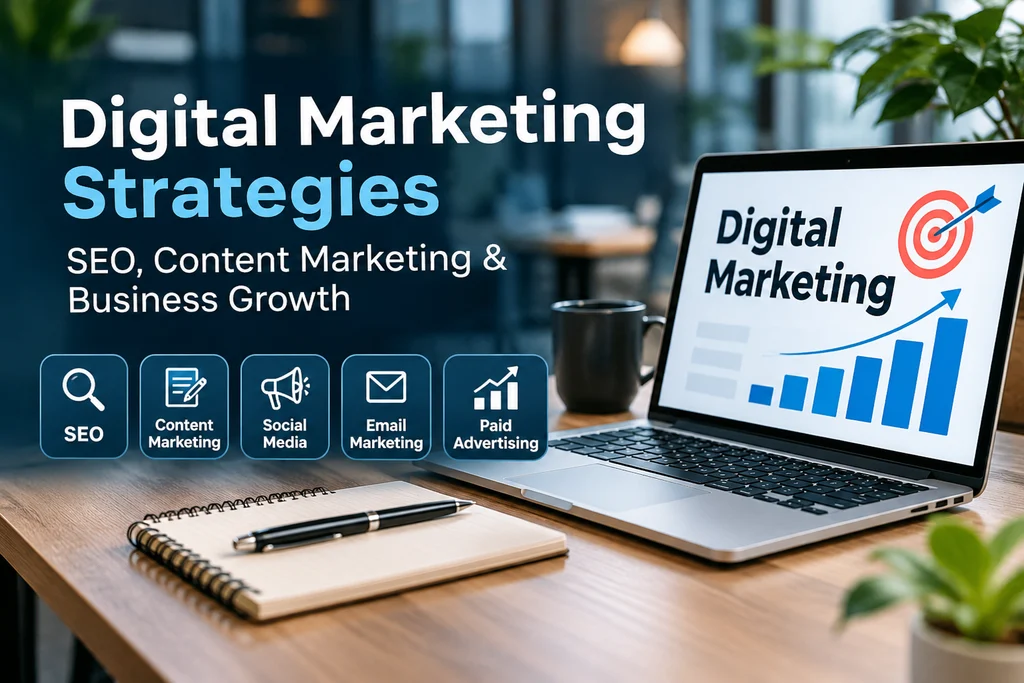
Common digital marketing channels include search engine optimization (SEO), content marketing, social media marketing, email campaigns, and paid online advertising.
The right combination depends on the business model, target audience, and marketing objectives. A small business may focus on local SEO and social media, while an online store may combine search marketing, email campaigns, and paid advertisements.
2. SEO Strategies for Better Search Visibility
Search engine optimization helps websites improve their visibility in organic search results. It involves understanding what people search for and creating useful pages that answer their questions.
Effective SEO starts with keyword research. Businesses should identify relevant search terms and understand the intent behind them before creating content.
On-page SEO includes writing descriptive page titles, organizing content with clear headings, using relevant internal links, and adding meaningful image descriptions. Technical SEO focuses on factors such as website accessibility, mobile usability, page performance, and search engine indexing.
Quality content is equally important. Pages should provide accurate, useful information rather than repeating keywords unnecessarily. SEO takes time, so businesses should monitor performance and improve pages based on meaningful data.
For more guidance on improving website visibility, read Google’s SEO Starter Guide.
3. Content Marketing for Business Growth
Content marketing focuses on creating and sharing useful information to attract and engage a specific audience. It can include blog articles, educational guides, case studies, videos, and other informative resources.
A good content strategy begins with customer questions and common problems. Instead of publishing articles without a clear purpose, businesses should create content that helps readers understand a topic, compare options, or make better decisions.
Consistency, accuracy, originality, and relevance help build trust over time. Content should also have a clear structure so readers can find the information they need easily.
4. Social Media Marketing Strategies
Social media platforms allow businesses to communicate with audiences, share updates, present products, and build brand recognition.
An effective social media strategy requires selecting platforms that match the target audience. Businesses should publish relevant content, maintain a consistent brand identity, respond to genuine customer questions, and review engagement.
Posting frequently does not automatically produce results. The focus should remain on useful communication, audience relationships, and measurable business objectives.
5. Paid Advertising and Email Marketing
Paid advertising can help businesses reach selected audiences through search engines and social media platforms. Campaigns may target people based on their interests, location, search behavior, or other available audience signals.
Before investing in advertising, businesses should define their goals, establish a budget, and create relevant landing pages. Campaign performance should be evaluated through metrics such as conversions, cost per lead, and return on advertising spend.
Email marketing offers another way to maintain communication with customers. Businesses can use permission-based email campaigns to share useful updates, product information, newsletters, and relevant offers.
6. Measuring Digital Marketing Performance
Measuring results helps businesses understand which marketing activities are working and where improvements are needed.
Useful metrics may include organic traffic, search impressions, click-through rates, qualified leads, conversion rates, email engagement, and advertising costs.
The most important metrics depend on the campaign objective. For example, a brand awareness campaign may focus on reach, while a lead generation campaign should focus more on qualified enquiries and conversions.
Regular analysis allows businesses to adjust their strategies based on evidence rather than assumptions.
Explore More with Blyntora
Digital marketing continues to evolve as customer behavior, online platforms, and search technologies change. Businesses that focus on useful content, relevant communication, and measurable results are better positioned to adapt.
Explore our latest articles on Blyntora to discover practical insights into SEO, content marketing, social media, online advertising, and digital business growth.
Blyntora — Practical insights for a changing digital world.